Credit Repair Specialist: How do they help?
Credit repair specialists are dedicated to helping consumers overcome the barriers that prevent them from achieving their financial goals. The most important aspect of credit repair is building a relationship with our clients and understanding what they want to accomplish to provide them with personalized guidance on how we can help. They will work to remove any negative marks on a person's record, as well as assist with rebuilding their score by establishing new lines of credit or paying off old debts. Credit repair specialists are often hired for individuals who have been turned down for loans because of bad credit histories.
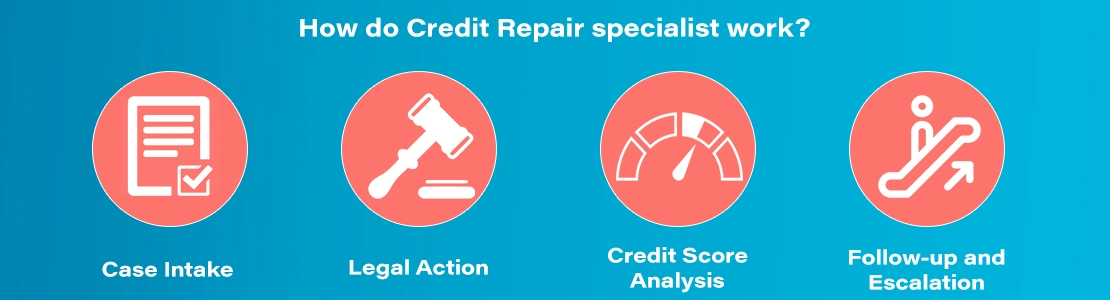
How do credit repair specialist works?
-
Initial Consultation
The specialist reviews your credit reports and listens to your goals. They identify negative items, inaccuracies, and patterns (late payments, collections, charge-offs, bankruptcies) to build a repair plan.
-
Authorization & Paperwork
You sign a service agreement and often a limited power of attorney or authorization so the specialist can communicate with credit bureaus, lenders, and collection agencies on your behalf.
-
Full Credit Report Analysis
The specialist obtains reports from the three major bureaus (Experian, Equifax, TransUnion) and catalogs every item to dispute, prioritize, or verify—focusing on items that most impact your score.
-
Dispute Preparation
They prepare and send formal disputes for incorrect, unverifiable, or outdated entries—using tailored dispute letters and supporting documentation to challenge each item.
-
Communication with Bureaus & Creditors
The specialist follows up with credit bureaus and creditors, tracking responses, requesting reinvestigations, and escalating cases where necessary (including sending certified mail or regulatory notices).
-
Negotiation & Settlement (if applicable)
For legitimate debts, they may negotiate with collectors for pay-for-delete agreements, settlements, or updated reporting—aiming to remove, reduce, or re-age negative marks when possible.
-
Documentation & Record Keeping
All correspondence, dispute results, settlement terms, and bureau responses are logged. This paper trail is essential for tracking progress and proving outcomes.
-
Monitoring & Ongoing Support
After disputes are resolved, many specialists provide ongoing monitoring, advice on rebuilding credit, and steps to prevent future problems (secured cards, credit mix, timely payments).
-
Education & Rebuild Strategy
They teach credit-building strategies—how to use credit responsibly, lower utilization, manage installment vs. revolving debt, and when to add new credit or close accounts.
-
Final Review & Exit Plan
Once agreed outcomes are met or improvements occur, the specialist provides a final report, recommendations for maintaining gains, and an exit plan to sustain long-term credit health.